What is Email Marketing? The Only Guide You Need to Start Growing
Let’s be honest for a second. How many times have you checked your phone today? And out of those times, how often did you glance at your inbox?If you are like most people, the answer is “a lot.”Despite the rise of TikTok, Instagram, and whatever social platform is trending this week, email remains the quiet giant of the internet. It is the first thing we check in the morning and often the last thing we check at night. For businesses, it isn’t just about sending messages; it is about building a direct line to the people who actually care about what you have to say.But what is email marketing, really? Is it just spamming people with sales offers? (Spoiler: Please don’t do that). Or is it a sophisticated digital engine that drives revenue while you sleep?In this guide, we are going to break down exactly what email marketing is, why it still has the highest ROI of any digital channel, and how you can build a strategy that actually works.

Defining Email Marketing in Simple Terms
At its core,
email marketing is a digital marketing strategy that involves sending emails to prospects and customers. Effective email marketing converts prospects into customers, and turns one-time buyers into loyal, raving fans.Think of it less as “advertising” and more as “relationship building at scale.”Unlike social media, where you are shouting into a crowded room hoping someone hears you, email is a one-on-one conversation. You are in their personal space—their inbox. That is a privilege, and when treated with respect, it yields incredible results.
It’s Not Just About Newsletters
While the weekly newsletter is the most common form, a robust email strategy includes much more:
- Transactional Emails: Order confirmations, receipts, and password resets (often the most opened emails!).
- Promotional Emails: limited-time offers, sales, and product launches.
- Lifecycle Emails: triggered based on user behavior, like cart abandonment reminders or “we miss you” messages.
Why Email Marketing Still Rules (The ROI Stats)
You might hear people say, “Email is dead.” Usually, these are people who don’t know how to use it correctly.The data paints a very different picture. For every $1 spent on email marketing, the average return on investment (ROI) is around $36 to $40. That outperforms SEO, PPC, and content marketing.Why is it so effective?
- You Own the Audience: On Facebook or X (Twitter), you are renting your audience. If they change their algorithm tomorrow, your reach could drop to zero. With email, you own your list. No one can take that away from you.
- Hyper-Personalization: You can send different messages to different people based on what they bought or what links they clicked.
- Mobile Reach: Everyone has a smartphone, and almost everyone has email set up on it.
If you are looking to audit your current digital footprint to see where email fits in, checking your site’s health is a good start. You can use resources like
Maximum SEO Tools to ensure your website foundation is solid before driving traffic to it via email.

How Email Marketing Actually Works
The process isn’t rocket science, but it does require structure. It generally follows a cycle:
1. Acquisition (List Building)
You cannot email people if you don’t have their addresses. This starts with a “Lead Magnet”—something valuable you offer for free in exchange for an email address. This could be an ebook, a discount code, or a checklist.
2. Segmentation
Once they are on your list, don’t just blast everyone with the same generic message. Group them. For example, if you run a pet store, you shouldn’t send dog food coupons to cat owners. Segmentation ensures relevance.
3. Engagement
This is where the content comes in. You send helpful information, entertainment, or updates to build trust. If you provide value, they will open your emails. If you only sell, they will unsubscribe.
4. Conversion
Once trust is established, you make the ask. This is where you pitch your product or service.
5. Analysis
Finally, you look at the numbers. Who opened? Who clicked? Who bought? You use this data to refine the next campaign.
The Power of Automation
This is where things get exciting. You don’t have to sit at your computer hitting “send” every time someone subscribes.
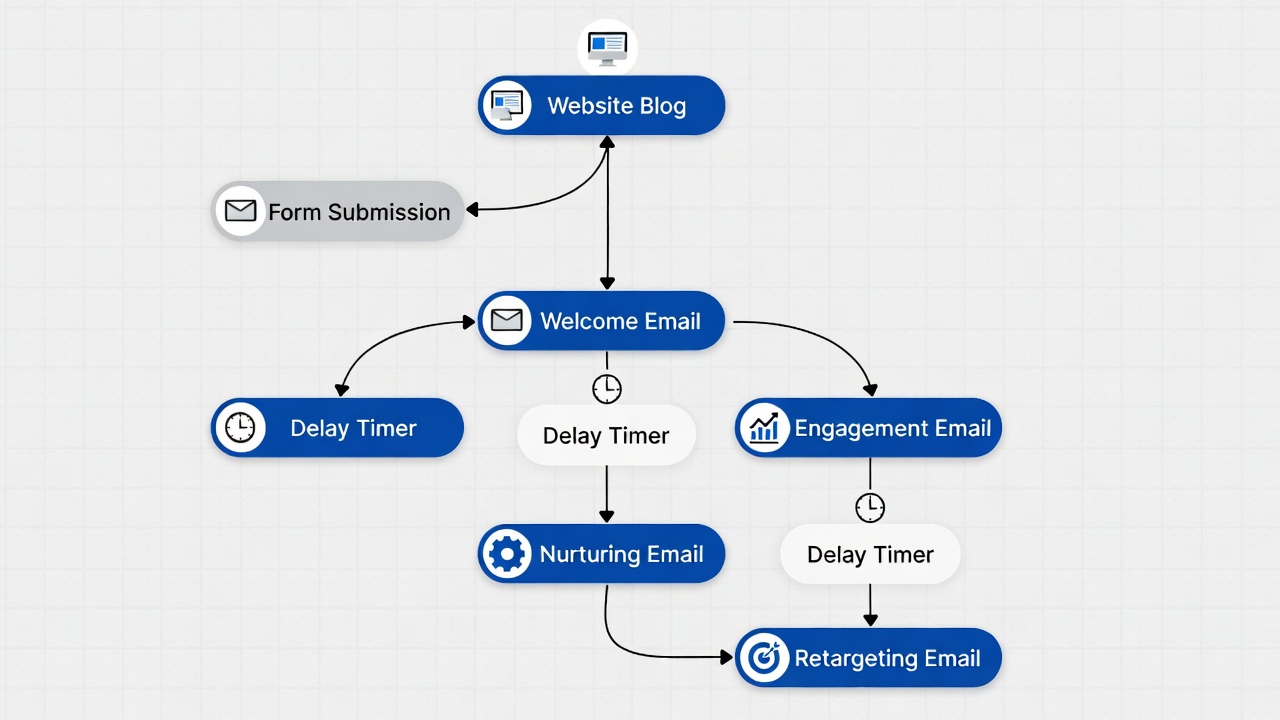
Email Automation allows you to set up “Drip Campaigns.” These are sequences of emails that go out automatically based on triggers.
Example of a Welcome Series:- Day 0 (Immediately): Welcome email + the discount code you promised.
- Day 2: A helpful tip related to your product (no hard selling).
- Day 5: A customer success story or case study.
- Day 7: A special offer or invitation to buy.
This runs 24/7. You could be on vacation, and your email marketing is still warming up leads and making sales. For those setting up their websites to handle these integrations, using reliable
SEO and web tools helps ensure your landing pages load fast enough to capture those leads.
Key Components of a Great Email
Writing an email that converts is an art. Here is the anatomy of a winner:
The Subject Line
This is the gatekeeper. If this is boring, nothing else matters because nobody will see it. Good subject lines create curiosity or promise a specific benefit.
Bad: “Newsletter #43”
Good: “The mistake that’s costing you sales (and how to fix it)”
The Preheader Text
This is the snippet of text seen next to the subject line on mobile devices. Treat it as a “second subject line” to give more context.
The Body Copy
Keep it conversational. Write like you are talking to one friend, not a stadium of people. Use “you” and “I” rather than “we” and “our customers.” Keep paragraphs short (like this one) so they are easy to scan.
The Call to Action (CTA)
What do you want them to do? Be clear. “Click here to read more” or “Grab your 50% discount now.” Buttons often work better than text links for this.
Common Mistakes to Avoid
Even seasoned pros make mistakes. Here are a few traps to avoid as you build your
digital marketing strategy:
- Buying Email Lists: Just don’t do it. It’s illegal in many places (GDPR, CAN-SPAM), and the people didn’t ask to hear from you. It ruins your sender reputation.
- Ignoring Mobile: Over 60% of emails are opened on mobile devices. If your email looks bad on a phone, it gets deleted.
- Sending Too Often (or Not Enough): If you email everyday, you might annoy them. If you email once every three months, they will forget who you are. Consistency is key—usually once a week is a sweet spot for most industries.
- Making Unsubscribe Difficult: Let people leave if they want to. Hiding the unsubscribe button frustrates users and leads to spam complaints, which hurts your deliverability.
How to Measure Success
You can’t improve what you don’t measure. Most
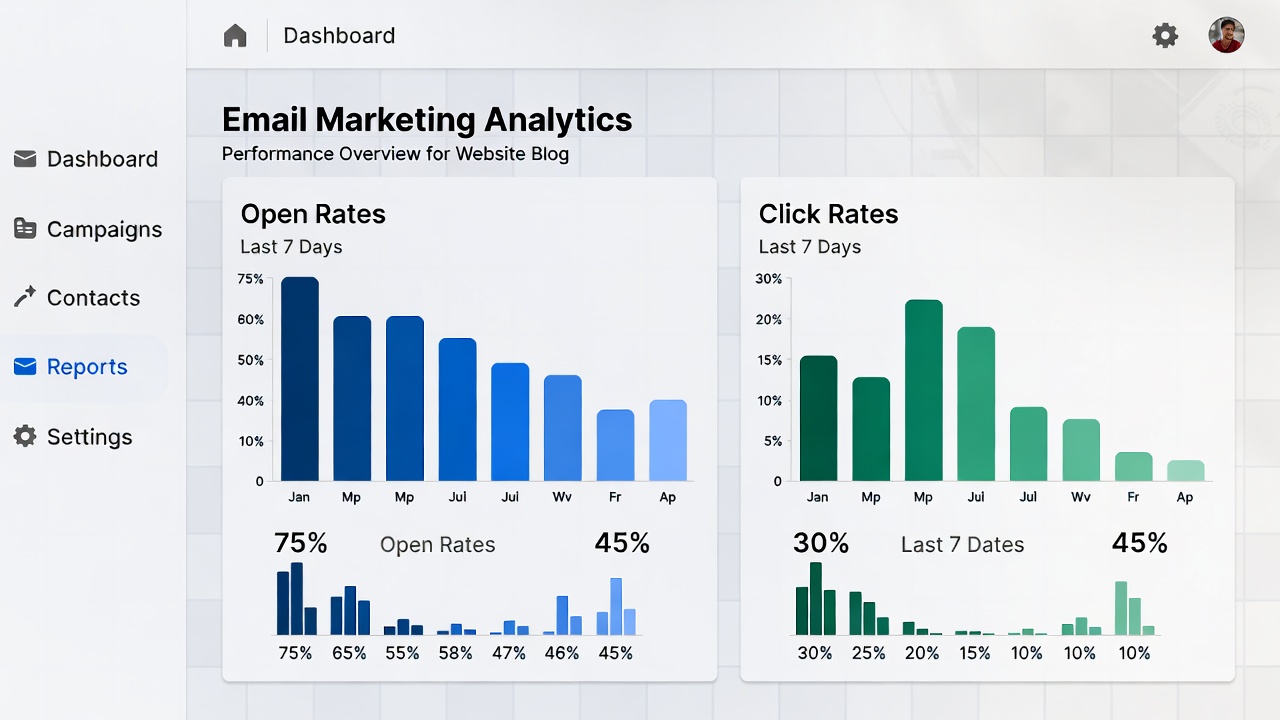
email marketing platforms provide detailed analytics. Here is what to watch:
1. Open Rate
The percentage of people who opened your email. A healthy average is between 20-30%. If it’s low, work on your subject lines.2. Click-Through Rate (CTR)
The percentage of people who clicked a link inside your email. This measures how engaging your content is. Average is often around 2-5%.3. Unsubscribe Rate
If this spikes, you are likely sending irrelevant content or emailing too frequently. Keep it below 0.5%.
Getting Started Today
If you haven’t started building your list yet, the best time was yesterday. The second best time is now.Start simple. Choose a reputable email service provider (like Mailchimp, ConvertKit, or ActiveCampaign). Create a simple sign-up form on your website’s footer or sidebar. Offer something small but valuable in exchange for the signup.Remember, behind every email address is a real person. Treat them well, provide value, and the results will follow.Email marketing isn’t about tricking algorithms or chasing trends. It’s about connection. And in a digital world that feels increasingly disconnected, that connection is worth its weight in gold.