
What Does Digital Marketing Mean ? The Real Definition & How It Works
If you ask ten different people, “what does digital marketing mean?” you might get ten different answers. Some will tell you it’s just running Facebook ads. Others will say it’s about posting dance videos on TikTok or sending out newsletters.
Here is the truth: they are all right, but they are also missing the bigger picture.
At its core, digital marketing isn’t just one thing. It is a vast ecosystem of connecting with your audience in the right place and at the right time. Today, that “place” is the internet, and the “time” is pretty much always.
Whether you are a small business owner trying to get your first sale, a student looking to break into the industry, or just someone curious about why those shoes you looked at yesterday are now following you around the web—this guide is for you. We are going to strip away the buzzwords and look at what digital marketing actually is, how it works, and why it has completely replaced the traditional rulebook.
Defining Digital Marketing in Simple Terms
Let’s keep this simple. Digital marketing is the act of promoting products or services using digital channels. If a marketing campaign involves electronic devices or the internet, it falls under this umbrella.
Think about traditional marketing for a second. That includes billboards, radio spots, newspapers, and direct mail flyers. Digital marketing is simply the evolution of that. Instead of a billboard on a highway, you have a banner ad on a website. Instead of a flyer in your mailbox, you get an email in your inbox.
But there is one massive difference: Interactivity and Data.
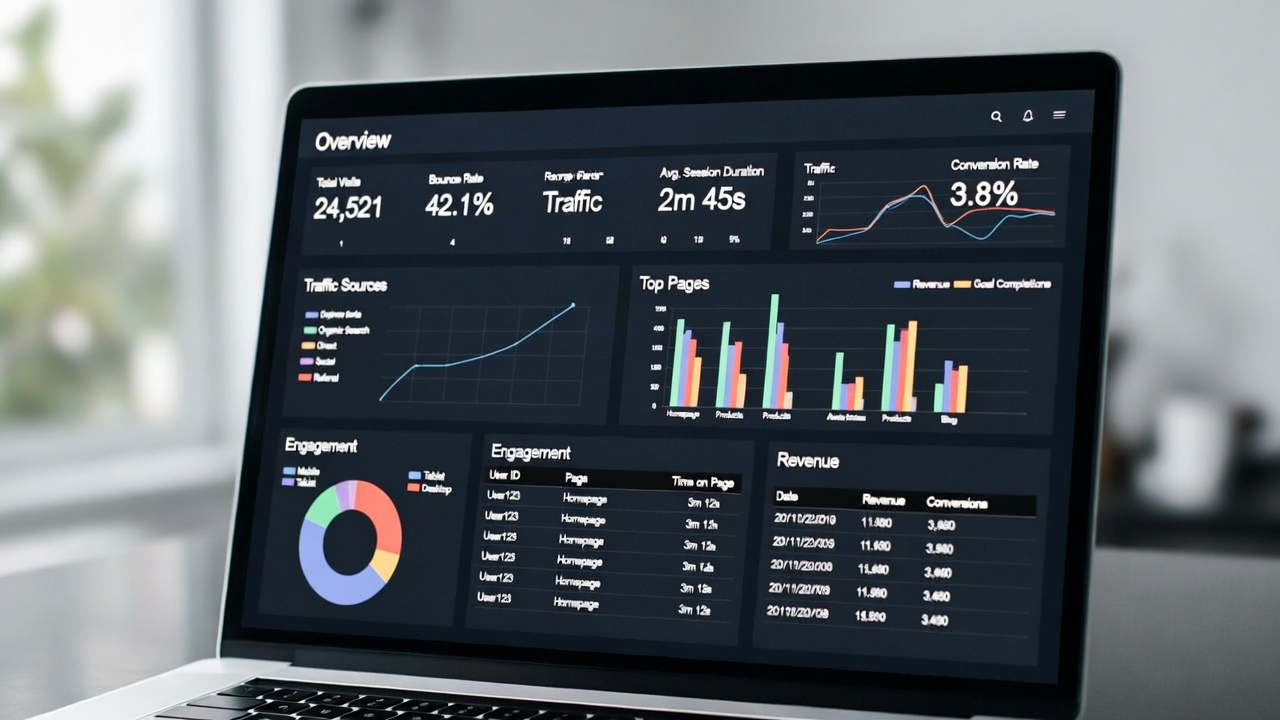
With a billboard, you have no idea how many people looked at it or if they actually bought your product because of it. With digital marketing, you can track every click, every view, and every dollar spent. It turns marketing from a guessing game into a science.

Why Does Digital Marketing Matter Today?
We live in a digital-first world. The average person spends over 6 hours a day online. If you are a business, you need to go where the people are. You wouldn’t set up a lemonade stand in a deserted alleyway; you’d set it up on a busy street corner. The internet is that busy street corner.
The Shift from Traditional to Digital
Traditional marketing isn’t dead, but it is certainly taking a backseat. Why? Because it’s expensive and hard to target. If you run a TV commercial for dog food, you are paying to show that ad to cat owners, people with no pets, and people who hate animals. That is wasted money.
Digital marketing allows you to be a sniper rather than using a shotgun approach. You can specifically target “women over 30 who own golden retrievers and live in Chicago.” That level of precision is why digital strategy services have become vital for modern businesses.
Measurable Results vs. Guesswork
This is the game-changer. In the digital world, everything is trackable. Tools like Google Analytics or specialized dashboards allow you to see exactly which strategies are working.
- Traffic: You know exactly how many people visit your site.
- Attribution: You know exactly which blog post or ad brought them there.
- Conversion: You know exactly how much it cost to get that customer.
If you are looking for ways to analyze your own website’s performance, checking out resources like Maximum SEO Tools can give you a head start on understanding your metrics.
The Core Pillars of Digital Marketing
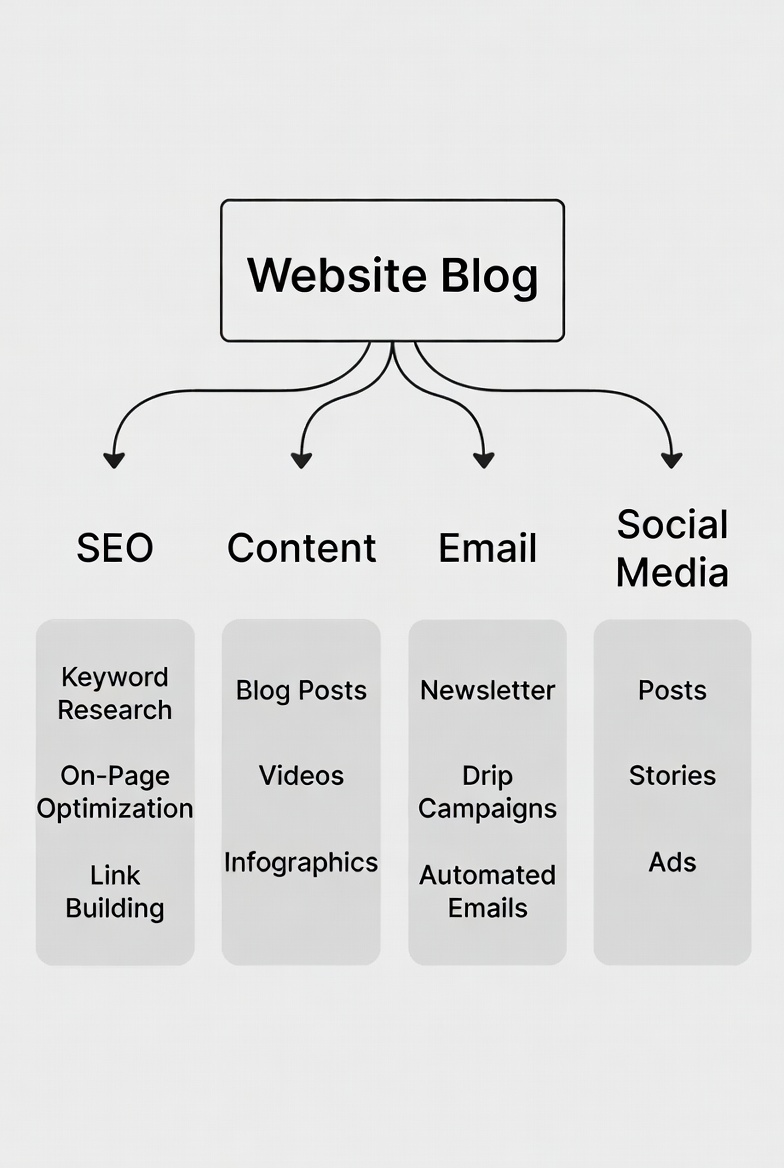
To really answer “what does digital marketing mean,” we have to look at the moving parts. It’s like an orchestra; the violins (SEO) do something different than the drums (PPC), but they work together to make music.
1. Search Engine Optimization (SEO)
SEO is the art and science of getting your website to show up at the top of Google when someone searches for something relevant. It’s not about paying for the spot; it’s about “earning” it.
Think of Google as a library. When you search, the librarian (Google’s algorithm) looks for the best book (website) to answer your question. SEO is just making sure your book has a great cover, clear text, and is filed in the right section so the librarian can find it easily.
Effective SEO services focus on three things:
- On-Page SEO: The content on your site (keywords, quality text).
- Off-Page SEO: The authority of your site (backlinks from other sites).
- Technical SEO: The backend structure (site speed, mobile-friendliness).
If you need to check your own site’s health or research keywords, Maximum SEO Tools offers free utilities to audit your on-page elements.
2. Content Marketing
If SEO is the engine, content is the fuel. Content marketing isn’t about pitching your product directly; it’s about providing value. It includes blog posts (like the one you are reading right now), videos, infographics, and ebooks.
The goal is to build trust. If you help someone solve a problem for free with a helpful article, they are much more likely to buy from you later. It creates a relationship before a transaction ever takes place.
3. Social Media Marketing
This is usually what people think of first. It involves promoting your brand on platforms like Facebook, Instagram, LinkedIn, and Twitter (X). But it’s not just about posting pretty pictures.
Social media marketing is about community management. It’s a two-way conversation. You aren’t just broadcasting; you are listening to comments, replying to messages, and engaging with trends. It helps humanize your brand.
4. Pay-Per-Click (PPC) Advertising
SEO takes time (often months). If you want traffic tomorrow, you use PPC. This is where you pay a platform like Google Ads or Facebook Ads every time someone clicks on your advertisement.
It sounds expensive, but if you do it right, it’s a money-printing machine. If you pay $2 for a click, and that visitor buys a $50 product, that is a great return. However, it requires careful management to ensure you aren’t burning cash on the wrong keywords. That is where professional Pay-Per-Click (PPC) management comes in handy.
5. Email Marketing
Don’t let anyone tell you email is dead. It actually has one of the highest returns on investment (ROI) of any digital channel. Why? Because the people on your list asked to hear from you.
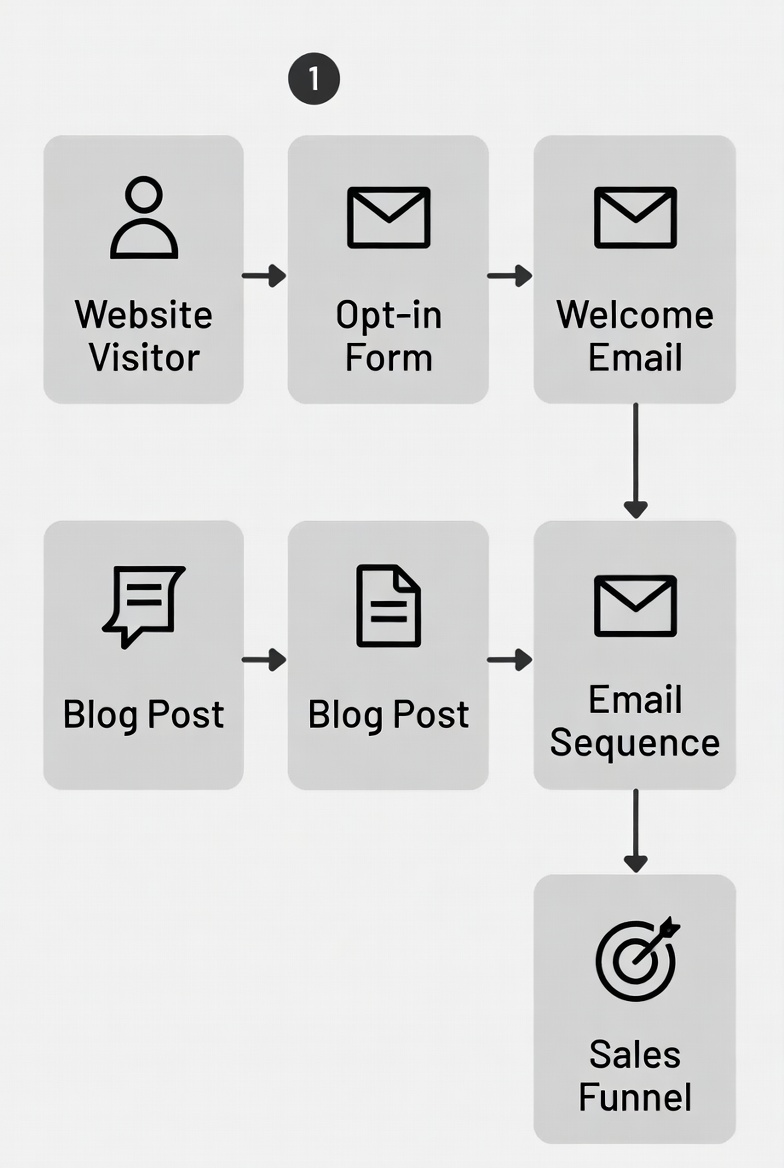
Email marketing allows you to nurture leads. You can send welcome sequences to new subscribers, special offers to loyal customers, or reminders to people who left items in their shopping cart.
6. Web Development and Design
Your website is your digital home base. You can have the best SEO and the best ads in the world, but if your website is ugly, slow, or hard to navigate, you will lose customers. Modern web development services ensure your site is fast, secure, and mobile-friendly.
How Does Digital Marketing Actually Work? (A Real-Life Example)
To truly understand “what does digital marketing mean,” let’s look at a hypothetical example. Meet “Sarah,” who owns a boutique selling handmade ceramic pots.
Step 1: The Search (SEO & PPC)
A customer, John, types “handmade ceramic plant pots” into Google. Because Sarah invested in SEO, her blog post about “How to Choose the Right Pot for Your Monstera” shows up. Or, perhaps John sees a Google Shopping ad for her pots.
Step 2: The Visit (Web Design & Content)
John clicks the link. He lands on Sarah’s website. It loads fast, looks beautiful on his phone, and the blog post is super helpful. He trusts her expertise.
Step 3: The Retargeting (Social Media)
John leaves the site without buying (this is normal!). Later that night, he is scrolling through Instagram. Suddenly, he sees a photo of the exact pot he was looking at earlier. This is retargeting. It reminds him of his interest.
Step 4: The Conversion (Email)
John clicks the Instagram ad but still hesitates about the price. He sees a popup: “Get 10% off your first order.” He enters his email address. He gets the code, applies it, and buys the pot.
Step 5: Loyalty
Two weeks later, John gets an email asking how his plant is doing in the new pot, with a link to buy a matching saucer. He buys again.
This entire journey involves SEO, Web Design, Content, Social Media, and Email Marketing working together. That is digital marketing.
The Benefits of Going Digital
We’ve touched on accuracy and measurement, but let’s break down the specific benefits that make this essential for businesses of any size.
1. Global Reach with Local Focus
You can sell to someone in Japan while sitting in your office in New York. However, you can also use Local SEO to ensure that people in your specific neighborhood find you when they search “near me.”
2. Cost Efficiency
You can start a digital marketing campaign with $5. You cannot buy a TV spot for $5. This levels the playing field, allowing small businesses to compete with major corporations like Digital Marketing Maximum and other industry giants.
3. Personalization
You can greet visitors by name in emails. You can recommend products based on what they bought before. This personal touch makes customers feel valued rather than just another number.
Getting Started: Your First Steps
If you are overwhelmed, take a deep breath. You do not need to do everything at once. Here is a simple roadmap to get started:
- Define Your Goal: Do you want more sales, more brand awareness, or more email leads?
- Know Your Audience: Who are they? Where do they hang out online? (LinkedIn for B2B, TikTok for Gen Z, etc.)
- Fix Your Website: Ensure it loads fast and works on mobile.
- Create Content: Start a blog or a YouTube channel answering questions your customers have.
- Start Small with SEO: Use tools to find keywords that aren’t too competitive.
Conclusion
So, what does digital marketing mean? It means opportunity.
It means the ability to connect with people who actually want what you are selling. It means stopping the practice of shouting into a void and starting the practice of building real relationships at scale. Whether you are diving into SEO, experimenting with social media ads, or just trying to write a better email, you are engaging in digital marketing.
The digital landscape changes fast. Algorithms update, new apps appear, and trends shift. But the core principle remains the same: provide value to your audience online, and the results will follow.
Ready to take your digital presence to the next level? Whether you need help with strategy, execution, or just the right tools, remember that the internet is open for business 24/7—and yours should be too.